🌙 Lunar Calendar

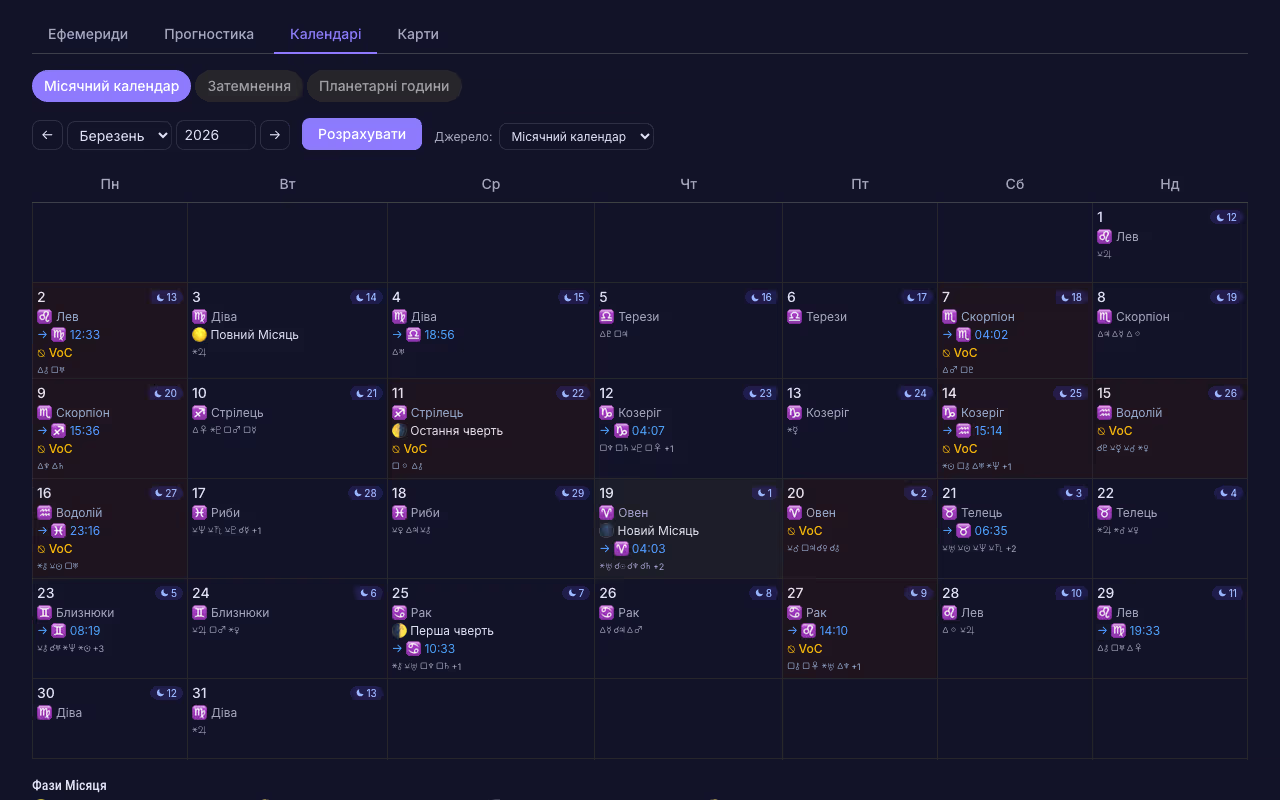
A comprehensive lunar calendar showing every phase, sign change, void-of-course period, and eclipse - essential for electional and horary work.

Lunar Calendar 1

Overview

The lunar calendar provides complete Moon data for any month: - All 8 lunar phases with exact times - New Moon and Full Moon highlighted with zodiac positions - Moon sign ingresses (when the Moon changes sign) - Void-of-course periods with start/end times - Solar and lunar eclipses marked - Moon's daily motion and declination - Useful for electional astrology (choosing favorable times) - Critical reference for horary astrology practitioners - Navigate between months with ease

How the Lunar Calendar Works

A lunar day is the period from one moonrise to the next. Since the Moon rises about 50 minutes later each day, a lunar day is longer than a solar day, and the boundaries between them shift daily.

The first lunar day begins at the moment of the new moon and is almost always shorter than the others, sometimes only a few minutes. Therefore, a month can have 29 or 30 lunar days, and the calendar does not align with calendar dates.

  • Synodic month 29.53 days
  • A lunar day is approximately 50 minutes longer than a solar day.
  • The first lunar day is counted from the new moon and can be very short.

Phases and what they mean

Four main phases are the new moon, first quarter, full moon and last quarter, that is, aspects of the Moon to the Sun at 0, 90, 180 and 270 degrees. Each lasts approximately 7.4 days.

Tradition associates the waxing moon with accumulation and the waning moon with completion. This is the most stable rule of the calendar and the only one that agrees among different schools.

  • New Moon: Sun and Moon in conjunction
  • First quarter: quadrature, Moon grows
  • Full Moon: opposition, maximum illumination
  • Last quarter: quadrature waning

Moon Sign and its Speed

The Moon passes through a sign approximately every 2.3 days, therefore its position changes fastest in the chart. The Moon sign is traditionally taken into account in calendar's everyday recommendations more often than the day number.

The Moon's speed is not constant: near perigee it reaches 15 degrees per day, near apogee it falls below 12. This affects the duration of stay in a sign and on the exact moments of aspects.

  • Moon in the sign for approximately 2.3 days
  • Speed ranges from 11.8 to 15.4 degrees per day.
  • Apogee and perigee shift the duration of the lunar day.

Moon Without Course

Moon void-of-course is the period from the last exact aspect of the Moon in a sign until it enters the next sign. Duration ranges from a few minutes to nearly 24 hours.

Tradition advises against starting new ventures at this time, as the outcome may not match expectations. This classic rule stems from horary astrology, where it is most easily verified.

  • Period from the last aspect to sign change
  • Duration from minutes to nearly 24 hours
  • Aspect sets considered vary between schools.

Smart Calendar Usage

The lunar calendar is a general background, the same for all people on Earth. It does not take your chart into account, so any contradiction between the calendar's recommendation and your transits is resolved in favor of your personal chart.

Smart timing applies to small tasks where stronger indicators are absent: when to get a haircut, when to start a routine task, or when to take a better rest.

  • The calendar is the same for everyone; the natal chart is individual.
  • Personal transits weigh more than the Moon phase number.
  • For important decisions, use electional astrology, not a general calendar.
Get started

Start Working in AstroWay App

Create your first natal chart in minutes. Free, precise, and private. 7-day PRO trial included.

Get started