↻ Forecasting

A complete forecasting toolkit with transits, multiple progression systems, directions, returns, and profections - all calculated in real time with Swiss Ephemeris accuracy.

Forecasting 1
1 / 4

Overview

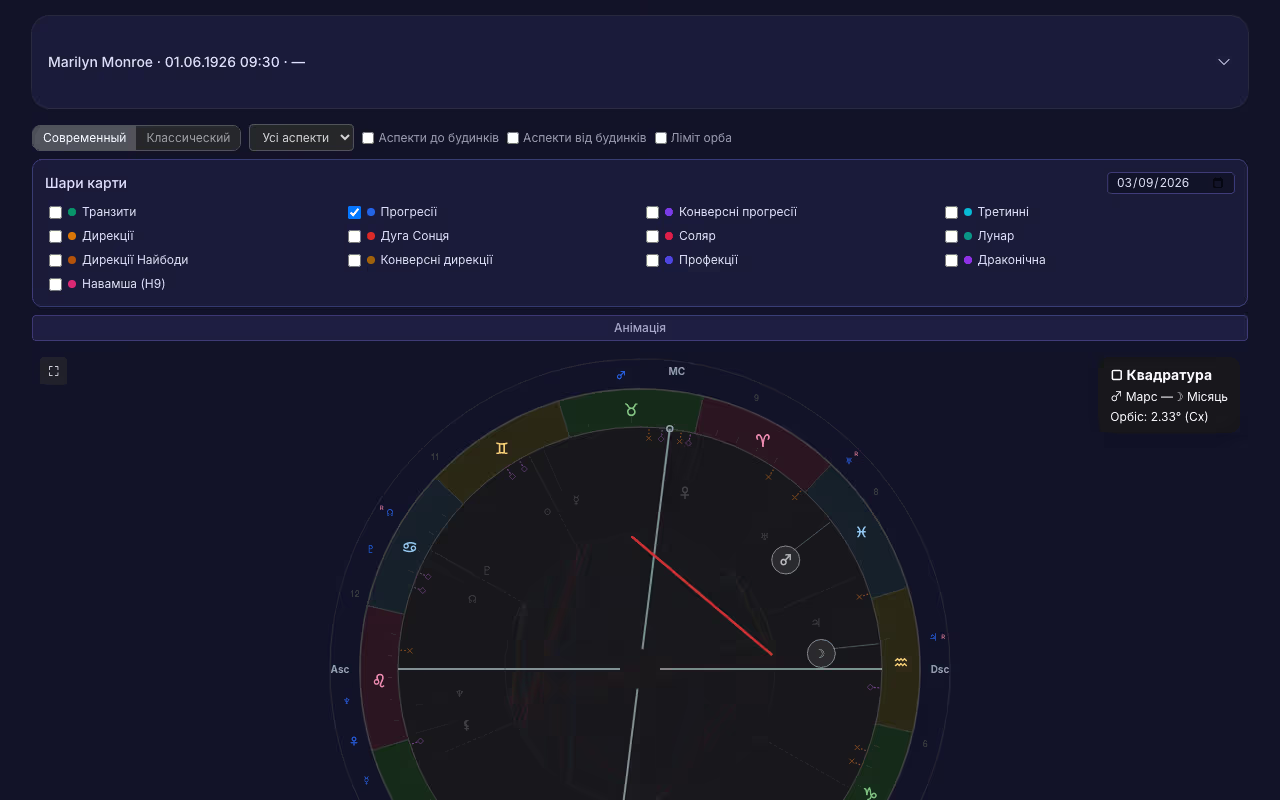
AstroWay provides a full suite of prognostic techniques used in modern and traditional astrology. All methods are layered onto the natal chart as additional rings, allowing you to see multiple timing techniques simultaneously. Up to 7 prognostic layers can be displayed at once on the chart wheel, with a time slider for animated playback.

Transits

Real-time transit positions overlaid on your natal chart: - Current planet positions with aspects to natal planets - Time slider to move forward or backward by day, week, or month - Animated playback at adjustable speed - Transit calendar showing upcoming exact aspects - Aspect timeline graph for visual planning

Secondary Progressions

The classic "day for a year" method: - Progressed planet positions for any date - Progressed aspects to natal chart - Progressed-to-progressed aspects - Converse secondary progressions available - Full progressed chart with houses

Tertiary Progressions

The "day for a lunar month" method, offering a faster-moving progression system: - Tertiary progressed positions - Aspects to natal chart - Useful for timing events within shorter periods

Directions

Symbolic direction techniques: - Naibod arc directions (solar arc) - Converse directions - Profections (annual sign-based progression) Directions move all planets by the same arc, showing when natal configurations are activated by the directed movement.

Solar & Lunar Returns

Return charts for cyclical analysis: - Solar return - chart for the exact moment the Sun returns to its natal position each year - Lunar return - monthly chart for the Moon's return to natal position - Calculate for birth location or current residence - Full chart analysis with aspects and houses

Secondary Progressions

Secondary progressions are built on the principle of a day for a year: the chart for the second day after birth describes the second year of life, the chart for the 30th day describes the 30th year. This is a symbolic key, not an astronomical movement.

Progressive Sun moves approximately 1 degree per year and passes through one or two signs in a lifetime. Progressive Moon completes a full pass of the chart in approximately 27.3 years.

  • One ephemeris day equals one year of life.
  • Progressive Sun moves about 1 degree per year
  • Progressed Moon completes a cycle in 27.3 years

Progressive Moon and Phase Changes

Progressed Moon changes sign approximately every 2.3 years and house at the same rate. This is the most dynamic element of progressions and a convenient marker of inner background shifts.

Progressive New Moons and Full Moons are highlighted separately: the cycle of progressive Sun and Moon lasts about 29.5 years, and its beginning traditionally coincides with a change in life stage.

  • Progressive Moon changes sign every 2.3 years
  • Progressive lunar cycle of approximately 29.5 years
  • Progressive New Moon as a point of a new stage

Tertiary Progressions and Solar Arc

Tertiary progressions use a different key: one day equals one lunar month, so the chart moves faster and provides finer dating. They are less common but useful for detailing the year.

Solar arc direction moves the entire chart by the amount of the progressed Sun shift, approximately 1 degree per year. Aspects within the chart remain unchanged; only connections to the natal chart are altered.

  • Tertiary: 1 day per 1 lunar month
  • Solar arc moves the entire chart uniformly.
  • Inner aspects in direction remain unchanged.

Progressions to Read

First, changes in state are examined: when a progressed planet changes sign, house, or direction of motion. The station of a progressed planet is considered one of the strongest events in the life of a chart.

Next, aspects of progressed planets to natal ones. Due to their slow pace, such aspects remain exact for several years, so they are taken as a description of a period rather than a specific date.

  • Progressive planetary sign or house change
  • Progressive planet station as a turning point
  • Transits describe a period of several years.

Progressions with Transits

Progressions provide the backdrop; transits set the date. A progressed aspect can remain exact for 3 years, and the event occurs at the moment when a transit crosses the same point during that period.

Therefore, the most reliable forecast is based on a combination: progression shows the theme has matured, transit determines the moment.

  • Progression corresponds to the period; transit corresponds to the date.
  • Two methods combined are more reliable than each one separately.
  • Progressive angles require an accurate birth time.
Get started

Start Working in AstroWay App

Create your first natal chart in minutes. Free, precise, and private. 7-day PRO trial included.

Get started