∠ Aspect Timeline

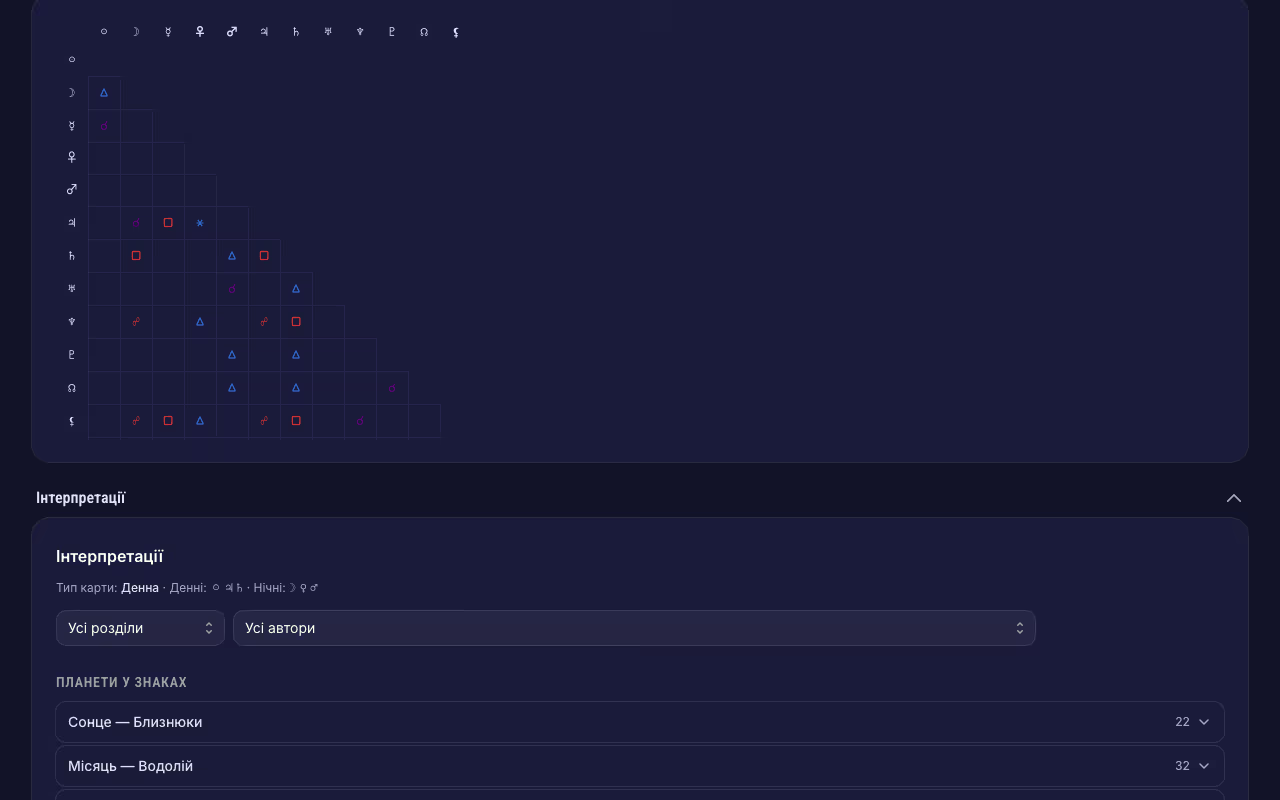
A visual Gantt-style chart displaying transit aspects over time - see when each aspect enters orb, reaches exactitude, and separates, all at a glance.

Aspect Timeline 1

Overview

The aspect timeline presents transit aspects as horizontal bars on a time axis: - Each bar spans the period an aspect is within orb - Exact aspect moment marked within each bar - Color-coded by aspect type - Grouped by transit planet for easy reading - Adjustable time range (weeks, months, year) - Hover for exact dates, orb values, and aspect details - Combined with the transit calendar for complete forecasting - Particularly useful for planning and identifying intense periods with multiple overlapping aspects

Aspects Strip Purpose

The list of aspects on a given date answers what is happening now, but does not show when it started or when it will end. The timeline unfolds the same information over time: it shows the period of influence for each aspect and how they overlap.

The same overlay is the most informative. One transit rarely brings an event, but the coincidence of two or three within a short period is noticeably more frequent.

  • Band from entry into orbis to exit for each aspect
  • Exact date is marked inside the band
  • Transit overlays show periods of intensification.

Orbs Shape the Chart

The width of the band fully depends on the selected orb. With an orb of 1 degree, the transit of Saturn lasts weeks; with an orb of 5 degrees, the same transit stretches over months and blends with neighboring transits.

Therefore, the orb should be a conscious decision rather than a default setting. A narrow orb is used for finding dates, while a wider one is used to understand the general background.

  • Narrow orbis for event dating
  • Wider orbis for general background period
  • Different orbs for fast and slow planets

Filter by

Full feed is unreadable: The Moon makes several aspects daily, obscuring everything else. The first filter is to remove the Moon if you're looking at a horizon longer than 1 week.

Second natal filter. An aspect to the ruler of an important house is more significant than an aspect to a planet that does not rule anything in the chart.

  • Remove Moon from forecasts longer than 1 week
  • Leave aspects to the Lights, angles, and rulers
  • Minor aspects enabled only at tight orb.

Reading condensations

The practical method is to find sections on the timeline where three or more bands intersect, and see which themes converge there. These windows are the candidates for significant periods.

Empty periods are also informative. A period without strong aspects usually passes smoothly, and there’s no reason to plan any major changes during it.

  • Three or more crossings is a candidate for a significant period.
  • Empty areas indicate a calm background.
  • The theme is determined by the planets, not the number of stripes.

Astrology feed

The feed does not evaluate importance or distinguish between good and bad aspects. It shows geometry, and interpretation remains with the astrologer.

It also does not account for progressions, directions, or returns. The full year picture consists of several methods, and the transit band is just one of them.

  • Shows geometry, not value
  • Progressions and directions require separate review
  • Number of aspects does not equal the strength of the period
Get started

Start Working in AstroWay App

Create your first natal chart in minutes. Free, precise, and private. 7-day PRO trial included.

Get started