🕉 Vedic Astrology (Jyotish)

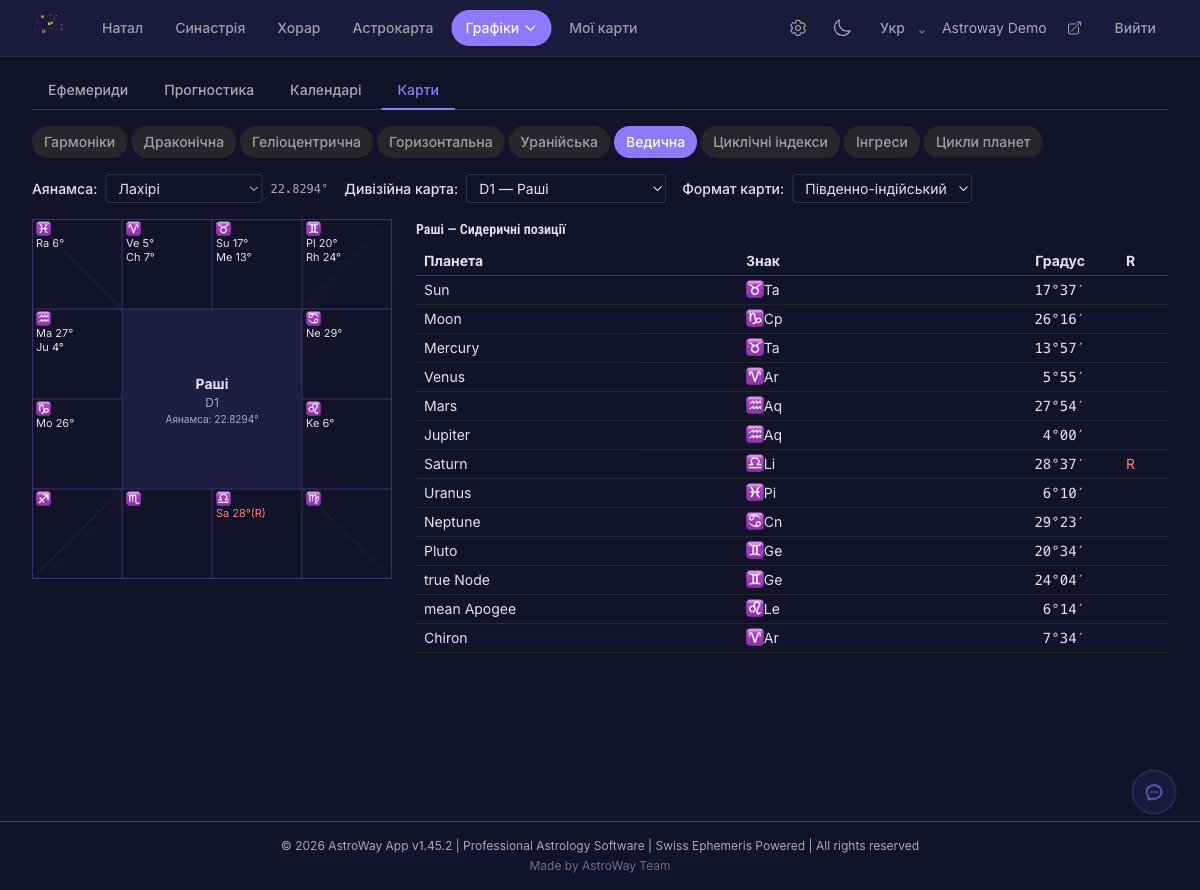
Full Vedic (Jyotish) astrology support - sidereal zodiac with ayanamsa selection, 16 divisional charts and traditional Indian formats.

Vedic Astrology (Jyotish) 1

Overview

Vedic (Jyotish) astrology - full Indian tradition support: - Sidereal zodiac accounting for precession - 5 ayanamsas: Lahiri, Fagan-Bradley, Raman, Krishnamurti (KP), Djwhal Khul - 16 divisional charts (varga): D1-D60 including the key Navamsha (D9) - South Indian square format (fixed signs) - North Indian diamond format (fixed houses) - Western format (wheel) for familiar display - Sidereal positions table - Ayanamsa value displayed in the header - D-chart formulas: from simple (D2 - Hora) to complex (D60 - Shashtiamsha)

Vedic vs Western Astrology

The main difference is the zodiac. Western astrology uses the tropical zodiac, tied to the vernal equinox point. Vedic astrology uses the sidereal zodiac, tied to the stars. Due to precession, the difference between them is now about 24 degrees.

In practice, this means that most planets in the Vedic chart will be in the previous sign. A person with the Sun at the beginning of Libra in the Western system will have the Sun in Virgo in the Vedic system.

  • Tropical zodiac from the equinox point, sidereal from the stars
  • Ayanamsa is currently around 24° and increases by approximately 50 arcseconds per year.
  • The most common ayanamsa is Lahiri, with Raman and Krishnamurti also used.

Nakshatras

In addition to the twelve signs, the Vedic system divides the zodiac into 27 nakshatras, each spanning 13°20'. Each nakshatra has a ruling planet among the nine and is further divided into four padas of 3°20'.

The Moon's nakshatra is considered the basic characteristic of a person and sets the starting point of the period system. Without it, Vedic forecasting cannot be constructed.

  • 27 nakshatras of 13° 20′ each
  • Four modes in each, 3°20′
  • Leaders of nakshatras repeat in a cycle of 9 planets.

Dashas and Periods

The primary predictive method is the Vimshottari Dasha system: 120 years are divided among the nine planets in unequal portions, from 6 years for the Sun to 20 for Venus. The starting point is determined by the Moon's nakshatra.

Each major period is divided into sub-periods in the same proportion, and those into the next level. This provides dating with accuracy to the week without involving transits.

  • Full Vimshottari cycle: 120 years
  • Venus 20 years, Saturn 19, Mercury 17, Ketu 7, Sun 6
  • Moon's degree in nakshatra sets the cycle start

Vargas and Houses

Vedic tradition uses a set of derivative charts. The most important is Navamsa, dividing each sign into nine parts: it is read alongside the main chart for marriage and inner essence topics.

Houses are most often equal: a house equals a sign, the Ascendant sets the first. This removes the problem of choosing a house system but makes the exact birth time even more critical for Navamsa.

  • Navamsa D9 as the primary derivative chart
  • Houses are usually equal from the Ascendant.
  • Time error has a greater impact on decans than on the natal chart.

Astrological incompatibilities

The most common mistake is interpreting a Vedic chart using Western meanings. The systems have different dignity rules, different aspect sets, and different management logic, so directly transferring interpretations yields incorrect results.

Aspects are also different: in Jyotish, a planet aspects the houses counted ahead, and Mars, Jupiter, and Saturn have additional special aspects that are not present in the Western system.

  • Dignities and rulerships differ in two systems.
  • Aspects are calculated by houses, not by degree distance.
  • Mars, Jupiter, and Saturn have special aspects in Jyotish.
Get started

Start Working in AstroWay App

Create your first natal chart in minutes. Free, precise, and private. 7-day PRO trial included.

Get started