
🌐 Mundane Charts

Country, city, and event maps: ingresses, quarterly points, and eclipses for societal-level forecasts, not individual.

Mundane Charts 1

Overview

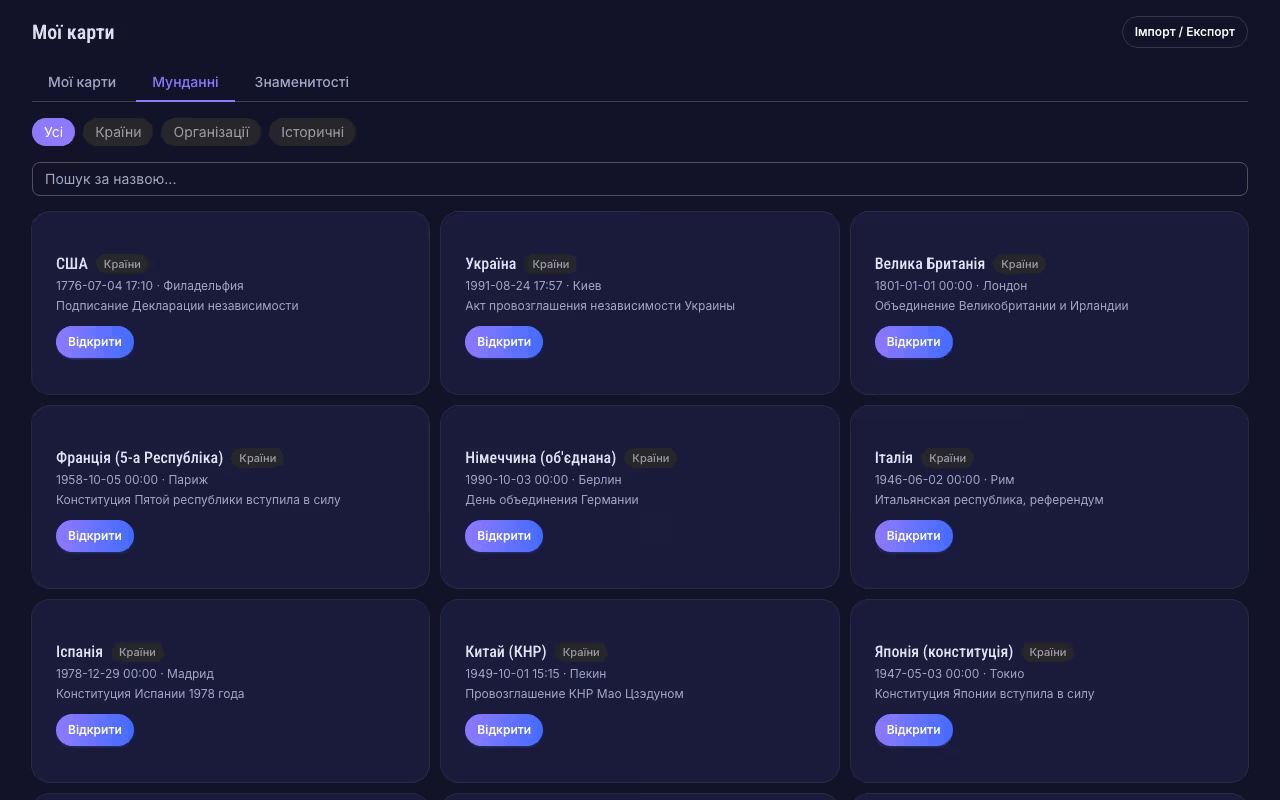
Database of 64 country charts - independence, constitution and key historical event charts.

Mundane astrology

Mundane astrology works not with a person, but with a country, city, or organization. The chart is built for the moment of an event significant for its formation: declaration of independence, adoption of a constitution, or inauguration.

Since states nearly always have a documented date and time, mundane charts are often more precise than natal charts: the source is verified in archives rather than memories.

  • State map by declaration date or constitution
  • City, company, or institution map by founding date
  • Event chart: signing of an agreement, start of hostilities, elections

Ingress and Quarter Cards

The basic annual forecast tool is the Sun’s ingress chart at 0° Aries, set for the capital. It describes the year for the country. The ingress charts for Cancer, Libra, and Capricorn provide quarterly insights.

This chart is read like a standard one: angles, house rulers, and the strongest planet. The difference is that the houses represent not areas of human life, but institutions: the tenth is authority, the seventh is foreign relations and war, and the twelfth is closed structures.

  • Aries: Yearly forecast based on the capital.
  • Cancer, Libra, Capricorn: quarter cards
  • The 10th house represents authority and the head of state, the 4th house represents land and the opposition.
  • The 7th house in mundane astrology governs external relations and open conflicts.

Eclipses and Great Conjunctions

Eclipses in mundane astrology are considered markers of themes for the coming months. The Saros cycle repeats a similar configuration approximately every 18 years and 11 days, so the previous cycle provides material for comparison.

Long cycles are set by Jupiter–Saturn conjunctions every ~20 years and slower pairs of outer planets. The shift in the element of major conjunctions every ~200 years traditionally marked an epoch change.

  • Saros: repeats every 18 years, 11 days, and 8 hours
  • Jupiter and Saturn: conjunction approximately every 19.86 years
  • Significant eclipses are those that fall on the angle of a country's chart.

Country Card Selection

The main challenge of mundane astrology is that a single country can have several competing charts: declaration, recognition, new constitution, or change of regime. For the USA, the time of 4 July 1776 is debated, and many states have three versions.

Practical approach 1: Check the chart against past events with known dates and work with the version that aligns with the facts. Do not select based on configuration beauty.

  • For one country, there are usually several versions of the chart.
  • Transit check version on known historical dates
  • A change in system may require a new chart instead of the old one.

Forecast Scope

The mundane chart describes the background and tension, not a specific event with a date. Statements about the exact election result date go beyond what the method can provide.

Additionally, any political interpretation can easily be retrofitted to a known outcome. A forecast holds value only if recorded before the event, not explained afterward.

  • The method describes a trend, not an event with an exact date.
  • Retroactive explanations prove nothing.
  • One country card does not explain local events in regions.
Get started

Start Working in AstroWay App

Create your first natal chart in minutes. Free, precise, and private. 7-day PRO trial included.

Get started