⇄ Transits

Track current planetary transits in real time - see exact aspects to your natal chart, navigate forward and backward with the time slider, and animate planetary movement.

Transits 1

Overview

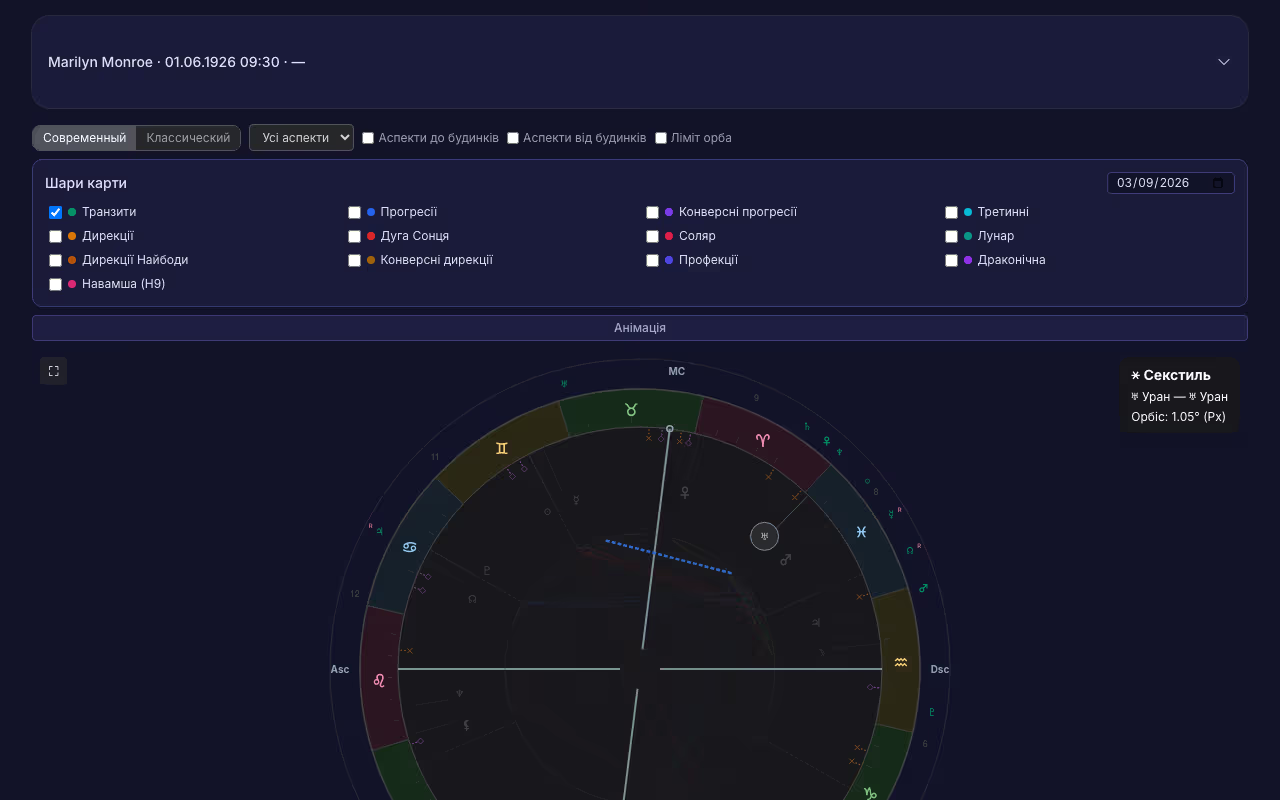
The transit module overlays current (or any date's) planet positions onto your natal chart: - Outer ring shows transit planets with aspect lines to natal positions - Time slider moves forward/backward by day, week, or month - Animated playback at adjustable speed - Transit-to-natal aspect table with exact orbs - Transit-to-transit aspects also available - Moon void-of-course periods highlighted - Transit calendar listing upcoming exact aspects - Customizable orbs separate from natal settings - Up to 7 prognostic layers displayed simultaneously

Transit Basics

A transit is an aspect formed by a planet currently moving across the sky to a point in the natal chart. The natal chart remains fixed, while the transiting planet moves through it, activating different themes in turn.

That’s why a transit is always a pair: a transiting planet plus a natal point. The mere fact that Saturn has entered a sign means nothing until it’s clear what’s in that sign in your chart.

  • Transiting planet aspects natal fixed point
  • The house where the transit occurs indicates the sphere.
  • Natal point management defines the content of the event.

Planet's Speed Sets Scale

Moon transit lasts hours, Sun transit days, Mars weeks, Jupiter and Saturn months, outer planets years. The scale of the event corresponds to the scale of the transit.

From here, a practical rule: it is futile to look for the cause of a noticeable life change among fast transits. Structural events are tied to Saturn, Uranus, Neptune, and Pluto.

  • Moon: hours, day mood
  • Sun, Mercury, Venus: days and weeks
  • Jupiter and Saturn: months, noticeable changes in circumstances
  • Uranus, Neptune, Pluto: years, structural transitions

Orbs and Exact Date

The working orbis of the transit is narrower than the natal one. For slow planets, it is reasonable to take 1 degree, for fast ones less. A wider orbis turns any day into a day of ten transits.

The event most often occurs during the approach phase and at the exact moment. A separating aspect is traditionally considered fulfilled, so there is no reason to expect anything new from it.

  • Working orb is approximately 1 degree for slow planets
  • Application is more effective than separation
  • A retrograde loop produces three exact dates instead of one.

Key Transits

The significance of a transit is determined not by the aspect's name but by what it touches. A transit to the Ascendant ruler or the Sun is more important than a transit to a planet that has no role in the chart.

The second in importance are the angles of the chart. A transit to the Ascendant or Midheaven is noticeable almost always, but it requires an exact time of birth.

  • Transits to the Sun, Moon and ruler of the ascendant
  • Transits on the chart angles
  • Transit to the planet that rules an important house
  • A conjunction of several transits is more significant than one strong

What transits don't do

Transit doesn't create what isn't in the natal chart. It activates an already established theme, so expecting events from a favorable aspect not confirmed by the chart doesn't make sense.

Transits are also not the only method. Without progressions, directions, and profections, the picture of the year is incomplete, and the coincidence of indications from several methods is more reliable than any individual transit.

  • Activate what is embedded, rather than create new.
  • Unique to millions of people, a natal chart reveals individuality.
  • Confirmation by another method is more reliable than a single transit.
Get started

Start Working in AstroWay App

Create your first natal chart in minutes. Free, precise, and private. 7-day PRO trial included.

Get started